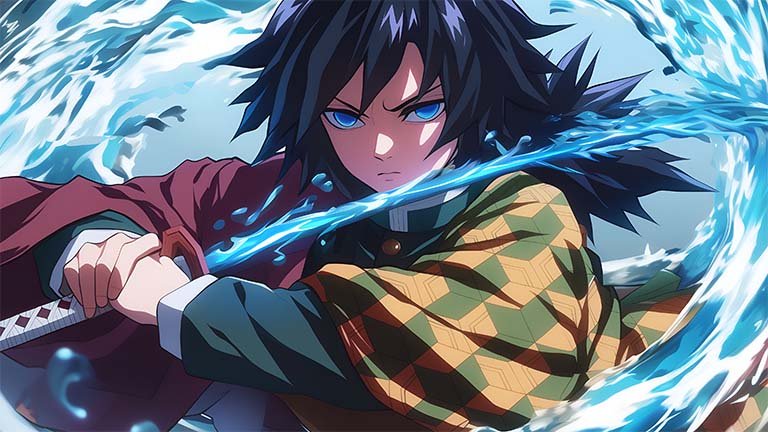
Welcome, avid anime fans and curious newcomers! You've landed here searching for "Giyu Tomioka in Fullmetal Alchemist Brotherhood explained," and as your editorial lead, I want to address something right off the bat: there might be a delightful mix-up happening. Giyu Tomioka, the stoic Water Hashira, is a beloved character from the world of Demon Slayer, a fantastic series in its own right. However, he doesn't appear in Fullmetal Alchemist: Brotherhood.
It's a common and understandable point of confusion given the vast landscape of anime! But don't worry, you're in the perfect place to unravel the epic, intricate, and deeply emotional narrative of Fullmetal Alchemist: Brotherhood. This flagship hub is designed to be your ultimate guide, breaking down everything that makes this series a modern classic, from its unique ending to its unforgettable characters and profound themes.
Understanding the Two Fullmetal Alchemist Journeys
Before diving into the specifics of Brotherhood, it's essential to grasp that Fullmetal Alchemist boasts two distinct anime adaptations, each offering a unique experience. The first anime, released in 2003, began while the manga was still in production. This meant its story eventually diverged significantly from author Hiromu Arakawa's original vision, crafting its own captivating, albeit different, conclusion.
Fullmetal Alchemist: Brotherhood, which premiered in 2009, stands as the faithful adaptation. It meticulously follows the manga's storyline from start to finish, offering fans the complete narrative as intended by Arakawa. Understanding these fundamental differences is key to appreciating the specific nuances of Brotherhood's acclaimed storytelling.
The Divergent Path of the 2003 Anime's Conclusion
To truly appreciate Brotherhood, it helps to know what sets it apart from its predecessor. The 2003 anime's conclusion presented a dramatically different reality for the Elric brothers and their world. In this version, the Homunculi—the series' primary antagonists—were born from failed human transmutations, carrying a tragic connection to their creators. Sloth, for instance, was the heartbreaking result of Edward and Alphonse Elric's forbidden attempt to resurrect their mother, Trisha. The ultimate villain, Dante, even created Envy in her own failed endeavor to bring her son back to life.
The climax of the 2003 series saw Envy tragically killing Ed, prompting Al to make the ultimate sacrifice of his soul to revive his brother. Ed, in turn, traded himself once more to bring Al back, leading to Ed being cast into a parallel world: our own Germany. This unique ending was further explored in a follow-up film.
The World Beyond the Gate: Conqueror of Shamballa
The cinematic sequel, Conqueror of Shamballa, picks up directly from the 2003 anime's conclusion. Set in 1920s Germany, it finds Ed entangled with the Thule Society, a Nazi-affiliated organization desperate to open the gate to Amestris. This film offers a poignant reunion for the brothers, but ultimately sees Ed choosing to remain in our world, with Al deciding to join him. They settle in Germany, hoping to bring peace amidst the looming shadows of World War II, forever separated from their friends back in Amestris. It’s a compelling, albeit bittersweet, resolution for that specific timeline.
The Definitive Ending: Fullmetal Alchemist: Brotherhood's Climax
When we talk about Fullmetal Alchemist: Brotherhood, we're discussing the story as Arakawa intended. Here, the overarching antagonist is Father, an ancient Homunculus from Xerxes, chillingly known as "The Dwarf in the Flask." His grand, terrifying plan culminates in "The Promised Day," a confrontation of epic proportions that pushes the Elric brothers and their allies to their absolute limits.
In the heat of battle, as Ed's automail arm is destroyed, Al once again makes a profound sacrifice, exchanging his soul to restore Ed's original arm. This critical moment empowers Ed to deliver the final blow to Father, who is then utterly annihilated by "The Truth" within the Gate of Truth itself. It's a powerful and satisfying conclusion to the central conflict, emphasizing the brothers' unbreakable bond and the true cost of their journey.
The Ultimate Price and Redemption
Following Father's defeat, Ed undertakes a final, pivotal act of human transmutation. This time, he enters the Gate of Truth not to gain something, but to sacrifice his alchemy abilities entirely, in exchange for Al's complete, original body. It’s a testament to his growth and his love for his brother. The Elric brothers finally return home to Resembool, reuniting with a tearful Winry, their journey of penance finally complete.
Two years later, Al embarks on a journey to Xing to further his studies in alkahestry, while Ed heads west for his own research. Before his departure, in a moment both heartwarming and quintessentially Ed, he proposes to Winry. The series' epilogue offers a beautiful glimpse into their future, showing Ed and Winry with their two children, surrounded by Al, May Chang, and their cherished friends. Other beloved characters also find their peace: Van Hohenheim is laid to rest beside Trisha, Ling Yao ascends to become the emperor of Xing, and Roy Mustang dedicates himself to rebuilding Ishval.
Beyond the Screen: A Manga Exclusive Epilogue
For those who love to delve into every corner of a story, the manga offers a small, but touching, bonus chapter titled "Another Journey's End" that wasn't adapted into the Brotherhood anime. After their return to Resembool, the iconic suit of armor that once housed Al's soul is delivered to their home. Al, demonstrating his newfound perspective and maturity, decides not to keep it as a memento. Instead, he asks Winry to melt it down, ensuring its metal can be repurposed to craft automail for others in need. It's a subtle yet powerful reinforcement of the brothers' commitment to helping others, even after their own arduous quest.
Why Fullmetal Alchemist: Brotherhood Endures
Fullmetal Alchemist: Brotherhood stands as a monumental achievement in anime, not just for its faithful adaptation of a phenomenal manga, but for its rich character development, intricate world-building, and profound philosophical questions. It explores themes of humanity, ethics, the cost of ambition, and the enduring power of family and sacrifice. The journey of Edward and Alphonse Elric resonates deeply because it's fundamentally a human story, filled with triumphs, failures, and ultimately, redemption.
While Giyu Tomioka remains a titan in his own right in the Demon Slayer universe, the world of Fullmetal Alchemist: Brotherhood offers a different, equally compelling narrative that continues to captivate audiences worldwide. We hope this overview has illuminated the incredible depth and heart of this series, preparing you to explore every facet of its brilliance.